

Here are some of our frequently asked questions. If you can’t find the answer and have something you would like to ask us, please do get in touch, we’d love to hear from you.
A Will is a legal document that sets out what should happen to your money, property, possessions, and other assets after your death. It also allows you to appoint executors to administer your estate and, where applicable, guardians for minor children.
A Will ensures that your wishes are followed after your death. Without one, your estate is distributed according to the rules of intestacy, which may not reflect your intentions.
If you die without a valid Will, you are said to have died “intestate.” Your estate will be distributed according to the intestacy rules, which determine who inherits and in what order. Unmarried partners, for example, do not automatically inherit under these rules.
In England and Wales, anyone aged 18 or over who has mental capacity can make a Will.
It means understanding:
- What a Will is and its effect.
- The nature and extent of your estate.
- Who might reasonably expect to benefit from your estate.
- The consequences of the decisions you make in your Will.
No. However, professional advice is strongly recommended, particularly where there are:
- Children from previous relationships
- Business interests
- Significant assets
- Trusts
- Potential family disputes
Generally, a Will must:
- Be in writing
- Be signed by the person making the Will (the testator)
- Be signed in the presence of two independent witnesses
- Be witnessed by those two people who also sign the Will
No. A beneficiary (or their spouse/civil partner) should not witness a Will, as this may invalidate any gift made to them.
Yes. You can either:
Make a new Will, or make a formal amendment called a Codicil.
A new Will is often preferable if multiple changes are needed.
A Will should be reviewed:
- Every three to five years
- Following marriage or civil partnership
- Following divorce
- After the birth of children or grandchildren
- Following significant changes in finances
Yes. In most cases, marriage or civil partnership automatically revokes an existing Will unless it was specifically made in contemplation of that marriage.
Divorce does not revoke a Will, but it generally treats an ex-spouse as having died before you for inheritance purposes. Your Will should still be reviewed immediately following divorce.
An executor is the person responsible for administering your estate after your death, including:
- Collecting assets
- Paying debts
- Obtaining probate if necessary
- Distributing the estate
You may appoint up to four executors. Most people appoint two executors, allowing them to act together and provide continuity if one cannot act.
Yes. A Will is the most appropriate place to appoint guardians for children under 18.
Store your original Will:
- With a solicitor or Will writer
- In a secure home safe
- In a specialist Will storage facility
Your executors should know where it is kept.
Yes. Common grounds include:
- Lack of capacity
- Undue influence
- Fraud
- Improper execution
- Claims for reasonable financial provision
Potentially, yes, provided it meets all legal requirements. However, homemade Wills are more likely to contain errors that can lead to disputes or unintended outcomes.
The most common mistakes are:
- Not making a Will at all
- Failing to update it after major life events
- Choosing unsuitable executors.
- Not considering inheritance tax implications
- Storing the original where it cannot be found
Yes. You can leave:
- Specific items (jewellery, vehicles, family heirlooms)
- Fixed sums of money
- Percentages of your estate
- Residual shares of whatever remains after debts and expenses
Absolutely. Gifts to charity are exempt from inheritance tax and can form part of a tax-efficient estate plan.
Costs vary widely depending on complexity. A straightforward professionally prepared Will is often relatively inexpensive compared to the cost and difficulties that can arise from having no Will.
The best time is now. Many people delay because they believe they are too young or that their affairs are simple, but a Will provides certainty and peace of mind regardless of age or wealth.
Read what clients say
Testimonials
READ OUR
News & Insights
 June 27th, 2026
A Will is only effective if it has been correctly signed and witnessed. Small [...]
 June 27th, 2026
What Happens to Income Tax When Someone Dies? When someone dies, many people think [...]
 June 27th, 2026
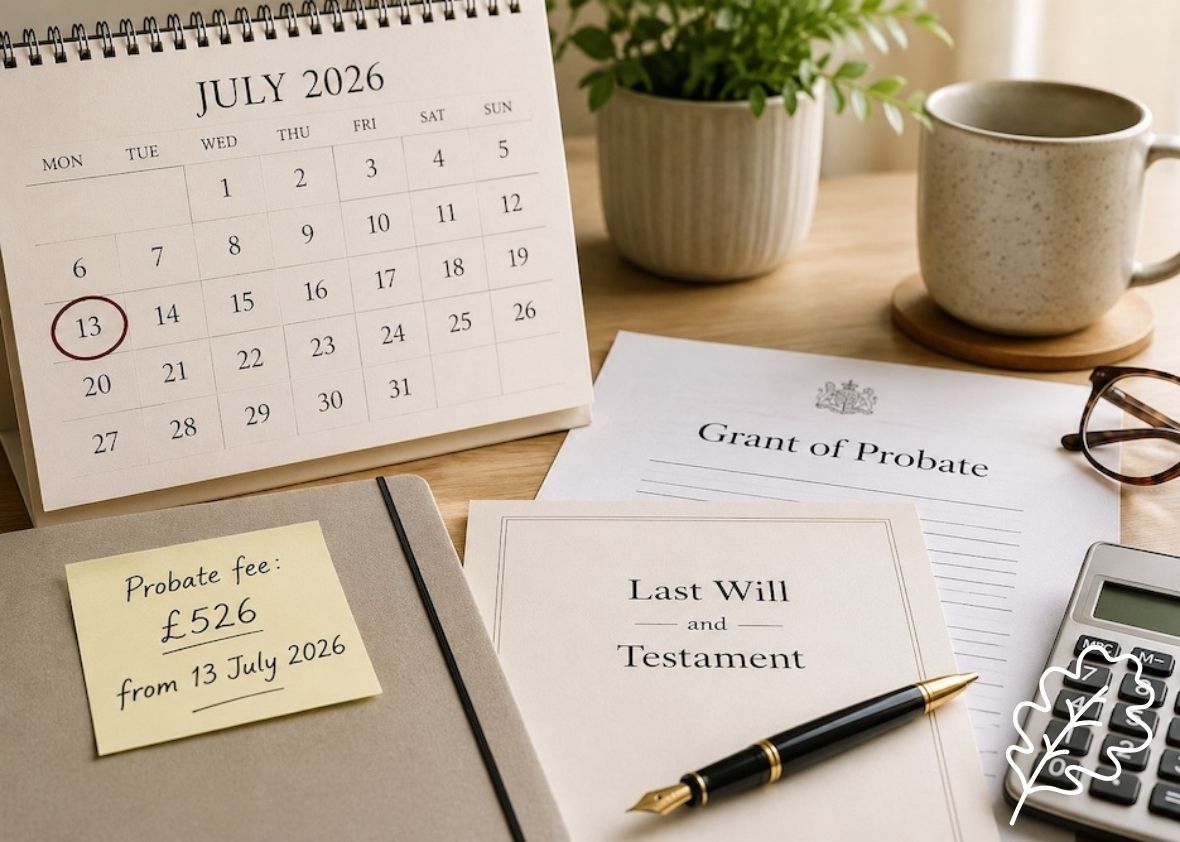
From 13th July 2026, the cost of applying for probate in England and Wales [...]
Get in touch
Contact Rob
If you have any questions, or would just like to chat through some options, feel free to get in touch with Rob.